
Aluminum Profiles for LED Strips
Aluminum profiles for LED strips are the fundamental structural and functional element of modern linear lighting. They serve as an efficient passive heat sink, dissipating heat from the LED chips to significantly extend their operational lifespan and luminous output. Simultaneously, they protect the strips from dust, moisture, and mechanical damage, providing a clean, professional finish without glare.

Product sorting
List of products

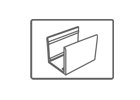
Aluminum profile suitable as a carrier for powerful LED strips and LED modules. It serves as a heat sink up to 30W. The profile is produced in 6-meter rods of anodized aluminum....

ALU Profile for edge lighting with LED tapes. A classical diffuser can be inserted into the profile or mounted on an edge of an 8 mm clear plexiglass for edge lighting.


ALU profile 16x16 CORNER 16 - Anodized application finds when lighting furniture, stairs, display cases, bars, hotels, workstations, etc.

ALU profile 18x18 CORNER 12 - anodized - finds application when lighting furniture, stairs, display cases, bars, hotels, work stations, etc.


ALU Profile MICRO WIDE IN 25 x 7 - anodized - profile suitable for milled thin plates.

ALU profile MICRO WIDE UP anodized - finds its application when lighting furniture, stairs, advertising showcases, bars, hotels, workstations, etc.


Thanks to its small size, the MIKRO-IN profile is great for fitting into thin furniture boards.

FAQ – Frequently Asked Questions
Is an aluminum profile really necessary, or is it enough just to stick the strip down?
If you want your strip to last longer than a few months, a profile is a must. LED chips heat up during operation, and aluminum acts as a passive heatsink that conducts heat away. Without cooling, rapid chip degradation occurs, the strip loses brightness, and it may start to peel off. Additionally, the profile protects the strip from dust, moisture, and mechanical damage.
What type of profile should I choose for my project?
- Surface-mounted: A classic that you simply screw or glue onto a surface. Ideal under kitchen cabinets.
- Recessed (grooved): They feature "wings" that cover the edge of the milled groove. The result is flush with the surface, which looks incredibly clean.
- Corner: They shine at a 45° angle, making them perfect for inside corners of cabinets or for illuminating a work surface from a corner.
What is the purpose of a diffuser (cover) and what is the difference between clear and opal?
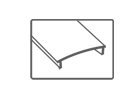
The diffuser protects the strip and diffuses the light. The clear cover transmits almost 100% of the light, but you will see individual luminous points (diodes) through it. The opal (milky) cover reduces brightness by about 20–30%, but it creates a beautifully continuous line of light and does not glare. This is ideal where the profile is directly in sight.
Can I cut and install the profiles myself?
Aluminum is a soft metal, so you can easily cut it with a regular hacksaw or a miter saw with a suitable blade. For mounting, you can either use special click-in brackets or simply drill through the profile and screw it down. Don't forget the end caps, which neatly close the profile and hide the cables.


